Showing posts with label Harley-Davidson. Show all posts

Monday, May 13, 2013

Harley-Davidson CVO Breakout 2013 Review

The savings from your Ramen noodle diet and windowless apartment living has amassed into a small fortune. And now, after riding the pretenders, graduating in displacement and quality with each pre-owned cruiser purchase, it’s time for reaping the reward for which you’ve struggled. The 2013 Breakout from Harley-Davidson’s Custom Vehicle Operations constitutes a dream bike and its launch, coinciding with your newfound disposable income, could be interpreted as fate.
If ever it was appropriate to plagiarize a cliché, and before I do let me apologize to Tom Riles and Brian J. Nelson (the renowned photographers of motorcycling ilk responsible for the images here): Pictures do not convey the beauty of this new model. Harley’s CVO group prides itself on creating “artistry you want to ride,” and the Breakout embodies this philosophy.  


Hard Candy Gold Dust and Liquid Sun with Pagan Gold is a mouthful of a color scheme, but it’s deserved. The process begins with hand-sanding the fuel tank and fenders, then hand-polishing the finish and intentionally leaving subtle swirl marks ghostly visible in tribute to the imperfection of the non-mechanized procedure. The Pagan Gold color is applied followed by a tinted clear coat. The Gold Dust portion is created by sprinkling large metal flakes across a black background then covering with the same tinted clear. The finished product salivates the mouth of a bike enthusiast more than an ice-cream mirage does a desiccated man in the desert.  

 The Breakout is also available in a similar Black Diamond and Molten Silver with Crushed Slate color scheme and a third configuration, Crimson Red Sunglo and Scarlet Lace with Hammered Sterling graphics. To create the old school effect on the Crimson Red model, Black Candy paint is sprayed through lace fabric placed onto a Silver base, then topped with a finishing layer of Scarlet Candy. Because the lace is applied by hand, no two painted parts will have duplicate patterns.

At $26,499, the Breakout is more than just striking colors and hand-worked metal driving its lofty MSRP. New, polished and chromed, 21-spoke cast aluminum Turbine wheels are accompanied by matching sprocket and brake rotors. The 21-inch front wears 130mm rubber and rolls between fork tubes spaced 1.75 inches further apart than other Softail models. A 240mm tire is fitted to an 18-inch wheel beneath the chopped rear fender.
“To create a compact, muscular profile we’ve chopped the fenders to the legal limit so more tire rubber is revealed at both ends of the bike,” says H-D styling manager, Kirk Rasmussen. “We gave the Turbine wheel a good deal of drama by pulling the spoke ridges all the way through to the rim, I think the ridges on the rear wheel look a little scary.
Powering the CVO Softail is a Screamin’ Eagle Twin Cam 110B engine with a Heavy Breather intake. The Electronic Sequential Port Fuel-Injected (ESPFI) motor is manipulated via Electronic Throttle Control (ETC) and produces a claimed 112 ft. lbs. of torque at 3500 rpm. Power is delivered to the rear wheel by way of hydraulic clutch operation, an Assist & Slip Clutch Pack said to reduce driveline load, and a 6-speed Cruise Drive transmission. Weighing in wet at 724 pounds, the Breakout boasts the best power-to-weight ratio of any 2013 H-D model.


 Riding the Breakout requires a mental reevaluation. The act of throwing a leg over the machine elevates your level of cool by a factor of four, and once underway, trolling the local scene becomes a heightened experience of recognized envy. 


CVO engineers managed to reduce the leveraging effect often produced by wide rear tires and keep the Breakout feeling balanced when navigating corners. Cornering performance is restricted by its minimal ground clearance (4.3 in) and suspension travel (4.6 in and 3.1 in, front and rear, respectively), but power delivery and the sound accompanying it is intoxicating as the Breakout demonstrates competence from idle and through the rev range in each of its six gears.


Like all CVO models the Breakout is equipped with ABS and a keyless ignition but is the only Softail to feature cruise control (positionable in half-mile-per-hour increments). Unlike the other 2013 CVOs, the Breakout does not come in a special 110th anniversary edition.
Akin to the Deuce and Springer CVO Softails before it, the Breakout continues the tradition of exclusivity, performance and style customers have come to expect from Harley-Davidson’s Custom Vehicle Operations.  If you’re drooling but can’t afford admission into the CVO club, start eating Ramen now and saving for the 2014 models.


Harley-Davidson CVO 2013 Review

If you’re in the enviable position of positive cash flow, a right-side-up mortgage and general liquidity in your financial affairs, Harley-Davidson has a motorcycle for you. Choose between four preferred-stock models from the Motor Company’s skunk works department better known as Custom Vehicle Operations.
New to the 2013 CVO stage are the Road King and Breakout while the Ultra Classic Electra Glide and Road Glide Custom return for encore performances. Auspicious is the 2013 model year for Harley-Davidson as the company celebrates 110 years of motorcycle manufacturing. To augment the occasion, Harley is offering three CVOs in anniversary garb with 110th-anniversary badging and fuel tank medallions, but the Breakout is way too cool to participate in any organized merrymaking.
2013 Harley Davidson CVO 1They’re all special, but our personal favorite of the four 2013 CVO models is the new Softail Breakout in its Hard Candy Gold Dust/Liquid Sun with Pagan Gold Graphics color scheme.


Standard among all CVO models is the Screamin’ Eagle Twin Cam 110 engine (110B on the Breakout) and the new Assist & Slip Clutch Pack said to reduce driveline loading during downshifts. The clutch lever has been reshaped to optimize control while clutch action is reduced by 10 percent and clutch lever hold-in force is 17 percent lower. Twenty-thirteen CVOs also come with cruise control, ABS and H-D’s Smart Security System as standard equipment.
Extra benefits when purchasing a 2013 CVO come in the form of a CVO embroidered indoor/outdoor storage cover and a one-year membership to the H-D museum including all kinds of special CVO privileges and discounts.
Let’s now get on to the specifics of each new 2013 CVO model.
2013 Harley Davidson CVO Breakout 08The Heavy Breather intake attached to the Screamin’ Eagle Twin Cam 110B engine emphasizes the Breakout’s virility.


2013 Harley-Davidson CVO Breakout
Price: $26,499
Worldwide Production: 1,900 units
Performance: 112 ft. lbs. @ 3500rpm
Colors:      • Black Diamond/Molten Silver with Crushed Slate Graphics
   • Crimson Red Sunglo/Scarlet Lace with Hammered Sterling Graphics
   • Hard Candy Gold Dust/Liquid Sun with Pagan Gold Graphics

2013 Harley Davidson CVO Breakout BJN41466Best power-to-weight ratio of any 2013 Harley, but cornering ability is limited because of minimal ground clearance and suspension travel.

Polished chrome Turbine wheels rolling on a fat 240/40-18 rear tire and equally wide 130/60-21 front with fenders chopped to the legal limit to show off as much rubber as possible, the new Breakout strikes an imposing profile without trying. Weighing 724 pounds wet and producing a claimed 112 ft.-lb. of torque at 3500 rpm, the Breakout boasts the best power-to-weight ratio of any 2013 Harley-Davidson model.
Powering the CVO Softail is a Screamin’ Eagle Twin Cam 110B engine with a Heavy Breather intake. The Electronic Sequential Port Fuel-Injected (ESPFI) motor is manipulated via Electronic Throttle Control (ETC) and the power is delivered to the rear wheel by way of hydraulic clutch operation, an Assist & Slip Clutch Pack, and a 6-speed Cruise Drive transmission.
Of the three paint schemes two feature hand-polished steel sections on the fuel tank and fenders while the third incorporates hand-laid lace stenciling. While the two hand-polished Breakouts sport black leather seats, the Crimson Red model flaunts brown leather seats. The CVO Breakout also boasts a polished and chromed single-rib cast aluminum oil tank.

2013 Harley Davidson CVO Road King 01Absent since 2008, the Road King returns to the CVO lineup with an MSRP almost identical to its predecessor from five years ago.


2013 Harley-Davidson CVO Road King
Price: $29,999/$30,999 anniversary model
Worldwide Production: 3,620 units including 900 anniversary models
Performance: 118 ft. lbs. @ 3750rpm
Colors:    • Burgundy Blaze with Hot Fusion Graphics
   • Crushed Sapphire with Cold Fusion Graphics
   • 110th Anniversary Edition Diamond Dust/Obsidian with Palladium Graphics
    
2013 Harley Davidson CVO Road King ActionThe Wind Splitter windshield with adjustable venting works, but some may not approve of its styling, and for that it’s detachable.

The Road King isn’t new to the CVO scene, having received the customized treatment on four other occasions, but at $29,999 next year’s CVO Road King is priced nearly the same as its last iteration in 2008, but with 2013 model-year amenities. The new CVO Road King is the first Road King to receive a factory-installed audio system with a 200-watt amplifier. The system features handlebar controls for operating the included 8GB iPod or your personal iPod/iPhone. Sound is pumped through two 5.25-inch speakers mounted in the fairing lowers and two 5x7-inch speakers located in the saddlebag lids. A handy carrying pouch in the saddlebag keeps the iPod/iPhone safe and dry when riding.
The 2013 CVO Road King is distinctive by way of its vented Wind Splitter windshield. The detachable windshield was developed in the Wichita State University’s wind tunnel. Using computational fluid dynamics, the H-D team was better able to determine the flow of air over and around objects thus significantly reducing wind buffeting to the rider. The vane within the vent is adjustable to match air flow to a rider’s preference. Not a breakthrough technology, the vented windscreen does, however, work as described while its swoopy design distinguishes it from lesser aftermarket options.
Other 2013 refinements include a new, ergonomically designed, 1.25-inch, chromed handlebar and a solo touring seat (via a removable passenger pillion) with a lower seat height. A low-profile console includes both a speedometer and a tachometer, and features programmable background colors. A new painting process features hand-finished graphics created with textures and solvents in a multistep process resulting in unique detailing on each motorcycle.
2013 Harley Davidson CVO Road Glide 01Back in black, the CVO Road Glide Custom returns for 2013 in its more-black-than-chrome guise.


2013 Harley-Davidson CVO Road Glide Custom
Price: $32,999/$33,999 anniversary model
Worldwide Production: 3,150 units including 900 anniversary models
Performance: 122 ft. lbs. @ 3750rpm
Colors:    • Atomic Orange/Galaxy Grey with Edge Graphics
   • Roman Gold/Burnt Emerald with Edge Graphics
   • 110th Anniversary Edition Diamond Dust/Obsidian with Palladium Graphics
    
2013 Harley Davidson CVO Road Glide HeadlightsIf light made noise, the dual LED Daymaker headlights illuminating the way for the CVO Road Glide Custom would be deafening.

While not exactly a Dark Custom, the blacked-out CVO Road Glide Custom introduced last year returns for 2013 with one magnificently bright trait — the Daymaker LED headlight. A first for any production Harley, the LED headlamp, compared to a halogen bulb, increases low-beam lighting distance (punch) by 30 feet (345 ft. vs 315 ft.), and the spread of light by 55 feet (120 ft. vs 65 ft.). High-beam effectiveness is even more impressive, increasing the headlight’s punch from 610 feet to an amazing 740 feet (an increase of 130 feet.), and the spread from 110 feet to 120 feet.
Viewed side-by-side at night with last year’s halogen-equipped Road Glide, the increased viewable field is obvious, and while the LED low-beam and high-beam lights are 37 and 31 percent brighter, respectively, power consumption is reduced by 50 percent.
Like the Road King, the 2013 CVO Road Glide gets the new 200-watt amplifier to feed its six speakers: two 5x7-inch fairing-mounted speakers, two 2-inch dash-mounted tweeters, and new for 2013, two 5x7-inch saddlebag lid speakers with bridged tweeters. Gone is last year’s unsightly radio antenna, now hidden within the fairing. The Harman/Kardon stereo features CD/AM/FM/WB and comes standard with an 8GP iPod in the right saddlebag.
2013 Harley Davidson CVO Road Glide ActionWith 122 ft. lbs. of torque on tap at 3750 rpm, the Road Glide boasts the highest performing CVO engine. Complemented with respectable ground clearance, the Road Glide makes for a sporty handling bagger.


Also new on the 2013 Road Glide Custom is the 1.25-inch, internally wired, black powder coated handlebars, a smoked Wind Splitter windscreen with a ghosted H-D graphic, diamond pattern leather seats, as well as hand controls, brake pedal, pegs, floorboards and heel shifter from the new Sliptstream Collection.
2013 Harley Davidson CVO Ultra Classic Electra Glide 01The best bagger in the business is the CVO Ultra Classic Electra Glide. The only way to one-up this machine is to throw down the extra thou for the Anniversary Model.


2013 Harley-Davidson CVO Ultra Classic Electra Glide
Price: $37,599/$38,599 anniversary model
Worldwide Production: 3,900 units including 1,100 anniversary models
Performance: 118 ft. lbs. @ 3750rpm
Colors:    • Stardust Silver/Dark Slate/Titanium Dust with Thunderblade Graphics
   • Tribal Orange/Dark Slate/Inferno Orange with Thunderblade Graphics
   • Typhoon Maroon/Black Diamond/Burgundy Blaze with Thunderblade Graphics
   • 110th Anniversary Edition Diamond Dust/Obsidian with Palladium Graphics
2013 Harley Davidson CVO Ultra Classic Electra Glide ActionI could spend all day, every day in this position until financial ruin or death made me stop. Yep, the seat is that comfortable.

At $38,599 the 2013 CVO Ultra Classic Electra Glide Anniversary Edition earns the honor of most expensive production Harley-Davidson, but the standard model at $37,599 is only $350 more expensive than the 2012 model it’s replacing.
One of the most comfortable full-dress touring cruisers available today, the Ultra Classic Electra Glide is also an impressive performer in its own right. Having the pleasure to be aboard the CVO Ultra Classic Electra Glide on a spirited ride through the coastal mountains North of Monterey, California, during the CVO’s recent press introduction, I later parked the bike with a newfound appreciation for its handling mannerisms. Along a particularly bumpy stretch of asphalt, the FLHTCUSE bottomed its suspension a couple times and scraped its floorboards now and again, but it never once lost composure, which, for a bike weighing 927 pounds wet, is quite an accomplishment.
And all this backroad scratching is taking place with music streaming from my iPhone safely secured in the saddlebag and blaring through the Harman/Kardon stereo system with high-performance BOOM! speakers (four 5.25-inch speakers with 40W per channel) and bass booster ports. A high fidelity, high performance experience on a luxo-touring motorcycle representing 110 years of American perseverance.
2013 Harley Davidson CVO Ultra Classic Electra Glide CockpitThe cockpit is functional, efficient and aesthetically pleasing, and the sound system is without equal.

For 2013 the CVO Ultra Classic Electra Glide returns with only one model-specific change, perforated leather inserts on the seats and backrest, but it also enjoys the upgrades of the other CVO models including the Assist & Slip Clutch Pack, Slipstream Collection of grips, floorboards, pedals, pegs, etc., the indoor/outdoor CVO  embroidered cover and new paint schemes.

Harley-Davidson Seventy-Two 2012 Review

Afros were worn loud and proud, as were polyester bellbottom pants and wide-collar shirts; America’s Team, the Dallas Cowboys, was a force to fear, ABC had itself a genuine hit with The Love Boat, and President Carter signed airline deregulation into law. Music from the likes of Led Zeppelin and Black Sabbath provided a hard-edged option to disco, while Star Wars, Jaws, Close Encounters of The Third Kind and The Godfather were packin’ ‘em in at the theater.
Hello? It’s the ‘70s calling.
The cultural hallmarks (some of them more forgettable than others) above paint a broad picture of the post-Vietnam social era in America. Part of that era was an expanding sense of individualism, perhaps no better realized and materialized than in the chopper motorcycle. A counterculture of fully customized rides with crazy-long raked front-ends, sissy bars, no front brakes and thundering exhausts burgeoned in California, from the Bay Area to SoCal, during the ‘70s.
2012 Harley-Davidson Seventy-Two Front RightReelin’ in the years. The new Seventy-Two from Harley is infused with chopper themes prevalent in the 1970s.


And so this is partially where, or rather when, Harley-Davidson reached for inspiration and styling direction for its recently unveiled Sportster 1200-based Seventy-Two.
Along with its styling, the Harley-Davidson Seventy-Two pays tribute to the cruising and customizing scene in Southern California by taking its namesake from California State Route 72, aka Whittier Boulevard, a street long known as a cruising hangout in Greater Los Angeles.
2012 Harley-Davidson Seventy-Two FrontThe Seventy-Two has a skinny 21-inch front wheel, but the whole bike is darn skinny.

As a modern representative of the early chopper scene, the Seventy-Two bears some signature chopper cues, like its 2.1-gallon peanut tank (on loan from another retro ride, the Forty-Eight), solo saddle, side-mounted license plate, mini-ape hanger handlebar, staggered dual exhaust, wire wheels rolling on white-wall tires, chopped rear fender and of course, metal-flake paint. Bow-chicka-wow-wow bow-chicka-wow-wow…
If you’re into the minimalist thing, and admire a bike with only the basics in view, then the Seventy-Two is a looker. Harley has done well in keeping this retro-fied ride looking classy and classic. Numerous components wear liquid-like chrome with a high-luster, quality finish, and are nicely balanced by the muted tones of the tank, fender and oil bag paint.
Your gaze is drawn to the gleaming engine and exhaust, yet the Seventy-Two avoids looking gaudy, like H-D went over-the-top with the shiny stuff. The skinny spoke front wheel and tiny tank create an airy, unencumbered presence. About the only item I’d ditch ASAP is the bulky, industrial-looking horn mount that’s bolted to the upper left-hand side of each cylinder. I realize the horn is a necessity; its chrome cover looks good on its own, and H-D blacked out the bracket as best as possible. However, visualizing the horn’s absence from that spot I could see how much cleaner and better highlighted the Harley Twin would look.
2012 Harley-Davidson Seventy-Two BeautyBrilliant chrome, spoke wheels with whitewalls, peanut tank, ape-hangers and metal-flake paint are some of the well-combined elements that make up the Seventy-Two’s retro chopper theme.


Pleased with the Seventy-Two’s appearance, I feared the Spartan rider accommodations dictated by the bike’s stripped-down ethos would offset my good first impression of this latest Sportster. Caught off guard is how I’d describe my reaction after slinging a leg over the first time.
2012 Harley-Davidson Seventy-Two CorneringCruising urban settings is where the Seventy-Two is most at home. With a comparatively tall seat height and roomy lean angle, this Sportster doesn’t drag footpegs as soon as many of Harley’s other cruisers.

Although the dual coil-over-spring shocks only provide 2.1 inches of travel (pretty typical of many late-model Harleys), a seat height of 28.0 inches towers over most other Harley cruisers and is a stark contrast to the way-low seat height theme of many other steeds in the H-D stable. Continuing the shock and awe, the forward controls (footpegs) felt unusually high. With right and left lean angle clearance at 28.6 and 29.8 degrees respectively, the Seventy-Two provides, at a minimum, 1 to 2 degrees more clearance than the Forty-Eight, Custom 1200 and SuperLow Sportster models (the sportbike-like XR1200X of course has lots more room to lean, and the Nightster and Iron 883 have a little more than 1.0 degree than the Seventy-Two).
Riding high, the 10-inch tall mini-apes on 2.0-inch risers round out the rest of the rider triangle and complement the high seat and pegs. Overall, the ergo layout felt well proportioned and natural to my 5-foot 8-inch and 30-inch inseam build. However, with 60-plus miles of freeway at the head of my initial ride it wasn’t long before I discovered that riding the Harley-Davidson Seventy-Two is ultimately always fun, but it’s less pleasurable to ride in certain settings than in others.
2012 Harley-Davidson Seventy-Two Left Side

The Seventy-Two’s mechanicals (engine, brakes, etc.) are standard-issue Sportster stuff, and by that I mean familiar, like an ol’ buddy. But do heed the caveat that the peanutty 2.1-gallon tank empties quickly – you’ll get roughly 100 miles from full up if you’re judicious with throttle application, but expect the low fuel warning to illuminate as early as 60 miles in.
2012 Harley-Davidson Seventy-Two BadgeThe Hard Candy Big Red Flake paint color with added pinstriping and prominent 72 front and center on the peanut tank is easily the coolest color scheme offered, and adds only $700 to the $10,499 base price. Vivid Black or Big Blue Pearl are the other available colors.

Trying to keep pace with L.A. traffic running upwards of 80 mph on the freeway proved too much of a chore as the fists-high-in-the-wind riding position means plenty of Popeye forearm strength is necessary to combat the windblast. Although 5.7 inches of front suspension travel from the spindly 39mm fork seems sufficient for most bumps, the stingy meat on the narrow 21-inch front wheel doesn’t provide much bump absorption, so expansion joints and cracks transmit quickly to the rider. After 50-ish freeway miles I bailed out for the relative comfort of surface street riding.
The Seventy-Two is much more at home profiling down the boulevard, or even on curvy roads, than long stints on the highway. With a comparatively modest 555-pound running order weight, the Seventy-Two changes direction without much effort; the single dual-piston front brake caliper isn’t overwhelmed, and the 1200cc (73.3 c.i.) 5-speed Sportster V-Twin feels especially spirited – I could even squeeze out a tiny wheelie at times when pulling away from stop.
Ready for your personal touch, man
If I owned a Seventy-Two I wouldn’t do a lot of customization to this Harley, especially to the beautifully painted Hard Candy Big Red Flake scheme – at risk of chafing some, I think the bike’s aura begs for a set of naughty exhaust pipes.
2012 Harley-Davidson Seventy-Two Profile RightWhat’s old is new again. The Sportster Seventy-Two turns back the hands of time, coolly bringing a 40-year-old era of motorcycling into the present day.

But since Harley’s done a lot of the heavy lifting by keeping styling tight and simple, the Seventy-Two also strikes me as a blank sheet waiting for a rider to personalize it into a one-off modern-day chopper. And a base price of just $10,499 leaves lots of room to get yo’ groove on. But even if you didn’t so much as change a screw to alter the Harley-Davidson Seventy-Two you’d have yourself a special ride. No other major OEM has anything quite like it.

Harley-Davidson CVO Softail Convertible 2012 Review

I’ve befriended many Harley owners over the years, and have met even more while at various events or when I’m out for a ride. Yet despite the number of Harley fans and loyalists I encounter, it never ceases to surprise me how few of them either know very little about, or haven’t ever heard of, Harley-Davidson’s line of in-house customs known as Custom Vehicle Operations, or CVO for short.
Crafted from existing standard model Harleys, a CVO is adorned with a laundry list of Harley’s own aftermarket goodies, as well as possessing a number of items or features unique to each model.
2012 Harley-Davidson CVO Softail Convertible blue right windshield bagsHarley-Davidson’s CVO Convertible is at one time both a light-duty tourer and boulevard-profiling cruiser. As a CVO model the Convertible wears premium Harley components, effectively making it an in-house custom motorcycle directly from The Motor Co.


CVOs are notably pricier than the standard models they’re derived from, but by comparison to many high-end, high-priced cruisers from independent shops with low-volume production, the CVOs offer some serious value. Attempting to build something close to a CVO one piece at a time would lead to a sum total cost well beyond a CVO’s MSRP.
And in terms of value, what revs most folks’ engines is getting more than what was bargained for, especially when the deal nets you something on the order of two-for-one. The $29,699 Harley-Davidson CVO Softail Convertible is just such a two-for-one deal.
2012 Harley-Davidson CVO Softail Convertible red left actionWith a windshield, a pair of speakers for tunes, a Garmin Zumo GPS, saddlebags and passenger backrest, the Convertible is ready for a long weekend on the road.


Model-year 2012 is the third year for the Softail Convertible in the CVO lineup. When it first surfaced in 2010 we discovered how crafty and practical Harley could get. With a few twists and turns of release knobs and latches this bike transforms from stripped-down stylin’ cruiser to destination-driven touring bike by way of its quick-release windshield, saddlebags and passenger pillion with backrest.
The Convertible’s quick-release components are so well integrated into the bike’s overall styling that when removed there’s almost no indication the bike was wearing saddlebags and a backrest only minutes prior. Even the passenger saddle removes lickity split by way of a simple knurled knob. All that’s left in the passenger seat’s absence is a set of stylish ribs, for lack of a better term, that keep the top of the rear fender from suffering abrasion by the underside of the passenger seat. These protective bumpers look like intentional design elements made to enhance the fender’s styling, and wouldn’t lead most unsuspecting observers to think they’re anything other than decorative.
This example of a detail ¬– how the bike looks with the pillion removed – speaks to what’s at the core of CVO motorcycles: ultimate attention to the little things, not just here or there, but in every aspect of the motorcycle with which a rider might interact.
2012 Harley-Davidson CVO Softail Convertible twincam 110 engineThe Screamin’ Eagle 110 is the big Twin powering all CVOs.

The Convertible is largely the same bike it was when it first entered the CVO family, but for 2012 Harley continued to refine a few of the bike’s touring elements.
After listening to customer feedback Harley decided to increase the windshield’s height by approximately 1.0-inch and width by 2.0 inches, while also adding venting and adjustable lower wind deflectors. According to Harley, this new taller and wider screen eliminates a significant amount of wind pressure on the rider’s head, as well as reducing turbulence in the cockpit. Considering the screen’s modest size it does a good job of keeping most of the windblast away, with only a moderate amount of buffeting during freeway speeds.
Although the windshield employs Harley’s tool-less attachment system, it’s nevertheless a little intimidating the first few times you attempt to gently ease the screen from the handlebar and the fork. My trepidation stemmed from not wanting to damage the windshield’s integrated speaker system wiring. However, once the speaker wire is easily disconnected, all that’s necessary to remove the screen is a firm pull. Replacing the screen requires some finessing to line up the attachment points, but after a half-dozen or so practice runs the whole process is pretty effortless.
2012 CVO Convertible: Harley Treats on a CVO
A Complete List of the Extras on the CVO Convertible
• Three exclusive paint schemes:
   - Crimson Red Sunglo with Scarlet Crystal Graphics
   - Abyss Blue with Catacomb Graphics
   - Satin Pewter with Catacomb Graphics
• Detachable windscreen with improved wind protection
• Garmin 660 GPS with integrated MP3 player
• Detachable, lockable, Leather saddlebags with distressed brown leather (satin pewter only) or reptile inserts
• Custom leather seat, removable passenger pillion, and detachable stylized passenger upright and backrest pad with distressed brown leather (satin pewter only) or reptile inserts
• Electronic throttle control with cruise control standard
• Anti-lock Braking System (ABS) standard
• Chrome, 1.25-inch internally-wired welded mini-ape handlebar
• Keyless ignition system with CVO backlit medallion on the tank console
• Mirror Chrome Aluminum Stinger Custom wheels, 18-inch, with matching Stinger chrome sprocket and Stinger floating brake rotors
• Digital speedometer and analog tachometer with gray satin tint aluminum face
• High-flow Ventilator engine air intake with leather on insert and rain sock
• Color-coordinated frame and swingarm, frame inserts, and horseshoe oil tank
• Screamin’ Eagle Twin Cam 110B Granite powder-coated powertrain with 110 Screamin’ Eagle identifiers on cylinder heads
• Rumble Collection grips, rider floorboards, passenger peg, shifter pegs, brake pedal pad and mirrors
• Black high-torque 1.4kW starter
• High-performance clutch with hydraulic actuation
• Harley-Davidson Smart Security System
Chrome Accessories
• Clutch line and brake line clamps
• Shorty chrome dual-exhaust with slashdown mufflers and heat shields
• Headlight trim ring, nacelle and back plate
• Front sliders and upper fork slider covers
• Wheel spacers
• Handlebar risers and caps
• Shifter, rear brake lever and forward control mounts
• Voltage regulator
• Rear brake master cylinder cover
• Switch housings
• Upper belt guard and debris deflector
• Sprocket bolt covers
• Valve-stem caps
• Front and rear axle nut covers
• Pivot shaft covers

Once the shield is off, the next touring-type bits to go are the saddlebags and, if you wish, the passenger backrest. Pop open the lockable saddlebag lids, twist a pair of clearly marked dials and you’re bag-less in seconds. The dual levers holding on the backrest require minimal effort and a handful tick-tocks on the clock before the saddle is liberated of the backrest.
2012 Harley-Davidson CVO Softail Convertible right side blueStripped of its touring-oriented extras the Convertible becomes a high-end custom cruiser ready to prowl the streets on Saturday night.

The first time I stripped the Convertible of its touring accoutrements I had to giggle at how quickly and painlessly I had transformed the bike from long-weekend tripper to Saturday night cruiser. 
Other than the CVO Electra Glide, the Convertible is the only other CVO to receive the Road Tech Zumo 660; and like on the Electra, a rider can operate the Convertible’s included iPod nano menus through the Zumo. Turn-by-turn driving commands from the navi system will play through the dual 3.5-inch 2-way speakers nestled at the base of the windshield.
Of the four CVO bikes for 2012, the Convertible is the only the one that isn’t built from a touring platform. Where the other CVOs have bodywork and fairings that conveniently hide unsightly wiring, hoses and such, the Softail-based Convertible has precious few places to conceal the necessary but ugly stuff. Since ABS is standard to all CVOs great care was taken to preserve the Convertible’s clean custom-bike styling by creating separate ABS modulators for the front and rear wheels, with the front ABS unit tucked neatly out of sight behind the upper fork cover. Here again we have more thoughtful details and special attention given to the CVOs.
2012 Harley-Davidson CVO Softail Convertible zumo gpsGarmin’s Zumo portable GPS is part of the CVO package for the Convertible. Audible turn-by-turn directions, as well as a rider’s MP3 files, play through the windshield’s integrated speaker system. Note the backlit Bar and Shield emblem just below the row of warning lamps. Also, Harley’s keyless ignition with integrated security system comes standard on all CVO models.

Motivating all CVOs is Harley’s 110 cubic-inch Screamin’ Eagle V-Twin that produces a claimed 105 ft-lbs of torque. In the Convertible this engine is the 110B, meaning the big Twin is counterbalanced in order to smooth out power pulses and vibes in the rigid-mount frame (all Softails are rigid mounts). Throttle response is excellent from Harley’s well-sorted EFI, as usual. There’s plenty of power on tap in the Screamin’ Eagle, and the minimalist air cleaner cover allows the rider to hear the engine snort and gulp air through the intake as the big Twin breathes deep.
“Our bike spat out 79.5 horsepower at 4750 rpm when strapped to the Gene Thomason Racing dyno,” says Duke of our mechanically identical 2011 tester, “but it’s the torque curve that is most impressive. It’s twisting out more than 90 ft-lb at just 2250 rpm, peaking just 500 revs later with 97.2 ft-lb. “
The 6-speed gearbox in this particular Harley struck me as a little less refined than what I’m used to from the numerous Harleys I’ve ridden.
“All CVOs are given hydraulic actuation,” Duke notes, “which reduces lever effort for the stronger clutch springs necessary with the TC110. But the larger-diameter grips on the Convert effectively bring the engagement point close to the bar, enough to cause the clutch to slightly drag when fully pulled in. This unfortunately delivers abrupt clutch engagement and makes neutral difficult to access when at a stop.”
The ingenuity and slickness of the Convertible’s quick-release touring-oriented add-ons, as well as its big engine, premium paint and chrome, and custom-bike aura are all standouts. Perhaps most immediately impressive to me, though, was the Convertible’s ride quality – for reasons good and a little less than good.
2012 Harley-Davidson CVO Softail Convertible blue action leftThe Convertible is a decent handling machine, and it provides a plush ride in most cases. However, if you corner too aggressively the Convertible’s limited lean angle clearance means it doesn’t take much to scrape the floorboards, as well as other hard parts in the vicinity of the boards. 


Part of the purposefully planned appeal in the Convertible is its friendly, all-riders-welcome ergonomic layout. And part of that layout includes a low, 26.2-inch seat height. This fact is likely why so many women favor this CVO more than any other CVO. However, a drawback to the chopped and dropped stance is a restricted lean angle. The Convertible scrapes hard parts early if you lean aggressively or too soon into a turn. It’s possible, however, to ride around this peccadillo, and the more familiar you become with the lean limitations, the quicker you’ll learn in what situations and conditions you can have a more spirited ride.
The other, positive, facet of the Convertible’s ride quality is how remarkably comfortable it is.
Although the Converti’s 3.3 inches of rear suspension travel is anywhere from 0.3 to 1.0 inch less than other Softail models, the Convertible’s ride is otherwise plush over most bumps. Front-end damping gobbled up most road imperfections so well I found myself wishing this front suspension was standard on all Harleys. Joining the well-damped hidden shocks in buffering the rider from the road is the thickly padded, supple seat – for both rider and passenger. Let’s hear, one more time, for the extras given to the CVOs.
Although the Convert has only a single-disc front brake setup, it uses high-end components like a Brembo caliper and braided-steel lines deliver good feel when retarding speed. HDLAN CAN/bus switchgear debuted in 2011, and the switches require less travel to activate and are less springy, “offering a tactile improvement in response and feel,” according to Duke. “Its self-canceling turn signals are among the best and most sophisticated in the biz, always canceling reliably quickly. This is a good thing, because the signal-indicator light at the bottom of the gauge pack isn’t easy to see. And its cruise control works well and is a real benefit when doing longer trips. “
2012 Harley-Davidson CVO Softail Convertible pewter actionHarley fans looking for a premium-level cruiser to take them out of town for the weekend should pay extra attention to the CVO Convertible – it’s the best of both worlds for the rider who wants to write just one check to get two types of cruisers.


During my first day with the Convertible more than one casual passerby admired this top-shelf Harley. And a couple folks even verbalized how impressed they were with the bike’s attractiveness and features. Surely, then, if these people – presumably not riders by my guess – can get sucked into the gravitational pull of a CVO’s appeal, why not more Harley enthusiasts?
“Cruising down city streets aboard the Soft-‘Vert, your eyes will be drawn to window panes as pedestrians swivel their necks checking to see who is rumbling past,” Duke relates. “The deep exhaust tone is about perfect to my ears, disturbing the peace only to tolerable levels without exceeding them.”
Since each year the numbers of CVO models are limited (and only a fraction of Harley’s annual total production volume) it’s understandable – to a point – how seemingly so few riders are aware of CVO. However, Custom Vehicle Operations is now in its 14th year, so take note, Harley enthusiasts looking to trade up: If you’ve dreamt of owning a custom cruiser but didn’t want to stray outside the Harley realm, CVO may have just what you need.
By the Numbers
Price$26,699
Engine TypeV-Twin
Displacement110 cubic inches
Bore x Stroke4.0 " x 4.38"
Compression9.15:1
Torque105 ft-lbs (claimed)
FrameSteel-Tube
Wheelbase64.2"
Rake/Trail32.0-degrees/5.8"
Front Suspension41.3mm conventional fork w/5.1" travel
Rear SuspensionHidden, horizontal-mounted coil-over w/3.3" travel
Front/Rear Wheels18-inch/18-inch
Tires130/70 x 18 Front, 200/50 x 18 Rea
Front BrakesSingle 4-pistons caliper w/292mm roto; ABS
Rear BrakesSingle 2-piston caliper w/292mm rotor; ABS
Fuel Capacity5.0 U.S. gal
Weight788 lbs Running Order
Seat Height26.2"


Harley-Davidson Seventy-Two and Softail Slim 2012 Review

Harley-Davidson has just released two new 2012 models that look in the Motor Company’s mirrors for inspiration, the XL1200V Seventy-Two and the FLS Softail Slim. The Seventy-Two represents the disco era when skinny choppers with fat metal flake paint jobs were vogue, while the Softail Slim evokes a period when bobbed FLs were the hippest things on two wheels.
AMF ownership of Harley-Davidson isn’t memorable due to indifferent quality standards, but as time passes it’s customary to focus on the good and discard the bad, and the new Seventy-Two underscores the better aspects of that decade. Whether watching one roll by or straddling the bike, the Seventy-Two so well represents customs of that period it’ll fool many into thinking it’s an oil-tight, customized 40 year-old Sportster.
2012 Harley-Davidson Seventy-Two and Softail SlimBlinged-out ’70s-era chopper vs minimalist FLS circa 1950. Both are cool, but we’re particularly fond of the new riff on Sportsters.


Mini apes, a 2.1-gallon peanut tank, laced, chrome wheels with a skinny MH90-21 front, and a proportionate 150/80B16 rear Dunlop whitewall tires in a package with a curb weight of 555 pounds. Staggered, shorty dual exhausts with slash-cut mufflers add to a ’70s chopper experience, but it’s that wonderful paint that makes it come to life.
2012 Harley-Davidson Seventy-Two Profile RightNiceties such as rounded valve covers and white wall-tires easily get lost in the sea of chrome on the Seventy-two.


The flakes in the Hard Candy Big Red Flake paint job ($11,199) are fat (supposedly more than seven times the diameter of metal flake used in typical production paint) and phat, and highlighted by the copious use of chrome elsewhere on the bike. The metal-flake effect on the display bike was made groovier with the addition of a silver metal-flake solo seat from the H-D accessories catalog. And cool metal-flake paint doesn’t stop there. Harley’s making available a variety of Big Flake colors, designs and glosses for numerous models, past and present. The Seventy-Two in its other color guises, Big Blue Pearl, and Black Denim retail for $700 less at $10,499.
2012 Harley-Davidson Seventy-Two TankMetal-flake on a peanut tank... how ’70s is that?

“In creating the Seventy-Two, we were also inspired by the vibe of the early chopper era,” says Frank Savage, H-D’s manager of industrial design. “Those bikes were colorful and chromed, but also narrow and stripped down to the essentials. You look at period examples and they are almost as simple as a bicycle. It’s a custom style that’s very particular to America and that California scene.”
Harley’s other new model, the Softail Slim, is the result of a standard Softail after a stint at Jenny Craig. From its trimmed front fender to its combination brake and turn signal taillights, the Slim has been reduced to only its essential items in their simplest forms.
“I’d personally like to strip the bike down even further,” says H-D senior designer, Casey Ketterhagen, “but this is as far as we can go on a production model. The Slim is intended to be a direct interpretation of home-built customs of the 1940s and 50s, and we used a number of components that evoke that era, beginning with a Hollywood handlebar.”
2012 Harley-Davidson Softail SlimHarley-Davidson’s Jennifer Hoyer and Paul James take the wraps off the FLS Softail Slim at longtime SoCal biker hangout, Cook’s Corner.


The handlebar to which Ketterhagen alludes was originally offered as an accessory for H-D models with Springer front-ends. The bar features a wide, arching bend and cross brace. Other era-specific cues are the half-moon floorboards, round air-cleaner and louvered headlight nacelle.
In vivid black the Slim retails for $15,499 while Black Denim and Ember Red Sunglo command a $400 increase to $15,884.
2012 Harley-Davidson Softail Slim GaugeSimplicity defines the stripped-down bobbers of the ’40s and ’50s, and the Softail Slim adheres to this philosophy. 


The Seventy-Two and Softail Slim personify two distinct periods in H-D’s 110-year history — which the company is celebrating in world-wide fashion this year — and  emphasize that Harley-Davidson isn’t simply capitalizing on current retro trends, but rather that the Motor Company was there when these styles were cool the first time around.
The Seventy-Two and Softail Slim are scheduled to be at most dealers today.
2012 Harley-Davidson Softail SlimVintage appeal, modern day powertrain. The Softail Slim is powered by H-D’s Twin Cam 103B air-cooled V-Twin.


By the Numbers
 XL1200V Seventy-TwoFLS Softail Slim
Price$10,499/$11,199$15,499/$15,484
Engine TypeAir-cooled, EvolutionAir-cooled, Twin Cam 103B
Displacement1200cc103 cu. in.
Bore x Stroke88.9mm x 96.8mm9.4mm x 111.1mm
Compression9.7:19.6:1
Torque72.9 lb-ft @ 3,500 (claimed)98.7 lb-ft @ 3,000 (claimed)
Tramsmission5-Speed6-Speed
Wheelbase60.0 in64.4 in
Rake/Trail30.1°/135mm31°/147mm
TiresFront: Dunlop 402F MH90-21 54H
Rear: Dunlop D401 150/80B16 71H
Front: Dunlop 402F MT90B16 72H
Rear: Dunlop D402 MU85B16 77H
Front BrakesSingle 2-piston caliperSingle 4-piston caliper
Rear BrakesSingle 1-piston caliperSingle 2-piston caliper
Seat Height28.0 inches25.9 inches
Wet Weight555 lbs700 lbs
Fuel Capacity2.1 gal.5.0 gal.


Harley-Davidson Dyna Street Bob 2012 Review

If you’ve had a hankering to get into the current bobber scene but don’t have the full pluck to go through the effort required to bob and chop a bike in order to get that bare-bones, simplified look, then consider the Street Bob from Harley-Davidson.
The Dyna-platform-based Street Bob takes broad-brush strokes to cover basic bobber themes, yet it manages to pull off the stripped-down look without coming across like a caricature of the real thing. And although the Bob’s appearance straddles the milder side of bobber wild, it also provides a clean, harmonious look rather than the hodge-podge cobble job sometimes seen on true bob-job bikes hand-assembled by their owners in back alley garages.
Yes, the Street Bob is a bobber as interpreted by a major manufacturer. By default that means its sensible and safe design (dictated by DOT requirements when building a bike for the masses) doesn’t incorporate many of the edgy, law-flouting styling elements found on many hardcore bobbers. But then again, the Street Bob comes with a factory warranty and Harley’s massive dealer network – no chance of that from Billy’s Backyard Bobber Emporium.
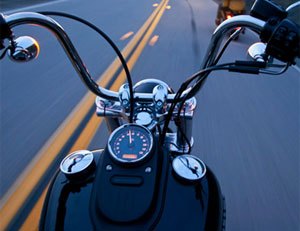
2012 Harley-Davidson Dyna Street Bob Right SideThe 2012 Street Bob looks like something a tuff guy might own, but this ready-made bobber is refined enough that just about any cruiser rider might like it.
Bob’s yer uncle
As part of Harley’s Dark Custom line, the Street Bob takes some of its cues from what the cool kids are doing with their rides these days. A target of immediate re-fabrication and hallmark styling trait of the go-your-own-way crowd is to somehow muck with a bike’s handlebar. For the Street Bob, it’s all about the fists-in-the-wind ape-hanger look.
The bar’s height (10.0-inch-tall bar with 2.0-inch rise) is legal in all 50 states, and just high enough that I didn’t feel like I was riding a cookie-cutter cruiser. But during extended freeway blasts the bar was almost too tall for my liking. Their placement means your arms are raised and open, leaving your torso to take the brunt of the windblast: fighting against the wind to keep a secure grip gets a little tiresome after 20 miles or more. How do the hardcore biker dudes ride with those mega-tall apes…?
Apes on the Street Bob might give the impression that they diminish handling, but it’s only during low-speed maneuvering that steering can feel cumbersome at times. Depending on your physical stature you might find that it’s a bit of a stretch to the outside bar-end when performing tight-radius turns, etc.
2012 Harley-Davidson Dyna Street Bob CockpitI had myself convinced that the mid-mount footpegs would place my knees too high to remain comfortable for long – just like I presumed about the apes. While the pegs aren’t low and forward as on most cruisers, I was surprised after the first few miles at how well the pegs’ placement complemented the rest of the rider triangle: not too low, not too high. A solo saddle is de rigueur for bobber styling. The SB has a 26.7-inch seat height, and the saddle’s shape and foam density was comfortable mile after mile.
For the past few years Harley has offered low seat heights for many of its cruiser models, and this usually comes at the cost of reduced rear suspension travel; as little as 2.0 inches on some models. The Street Bob instead provides 3.1 inches of travel for its dual coil-over-spring shocks, while the fork has a rather generous 5.0 inches. This extra travel makes itself known in the form of good damping with an overall ride quality notably more forgiving than Harleys with less suspension travel.
Slow speed handling can be awkward at times thanks to the high-reach bars. Nevertheless, the bike’s handling – including ease of steering and decent lean-angle clearance – is satisfactory. The Street Bob pictured is a 2013 model
Good ol’ reliable, that’s what I’m calling Harley’s Twin Cam 96 V-Twin powerplant. Now that the bigger 103-cubic-inch lump – currently in the Touring models, Softails and Dyna motorcycles, with the Dyna Street Bob and Dyna Super Glide Custom retaining the Twin Cam 96 – will become the new standard for large-displacement Harleys, the likeable qualities in the Twin Cam 96 may get lost to the new kid on the block.
Though the 96 is quickly becoming yesterday’s news, it’s still an engine with lots to offer in terms of authoritative low-end grunt and plenty of power on tap to motivate a large cruiser. The powerband is linear, fueling is smooth and reliable, and the six-speed gearbox shifts effortlessly, with near Japanese-motorcycle-transmission precision.
2012 Harley-Davidson Dyna Street Bob Left SideThe Street Bob’s combination of simplicity and attitude makes this turnkey bobber a likeable and entertaining bike.

The SB’s exhaust note has the requisite rumble, and pop-pop on the overrun, to match the bike’s no-nonsense, tough-guy vibe. The Bob’s brash-but-cool styling statement is further encapsulated by an all-black color scheme bookended by black laced wheels with black-wall tires, matte black engine finish and limited amounts of chrome. And a special styling cue that I found particularly cool is the minimalist, retro-styled brake light housing, looking like a part pulled from a 60s-era American-made sedan. And it also looks like it was made to work effectively but without much effort– that’s true bobber ethos!
For a production-level bob job the Harley-Davidson Dyna Street Bob has a lot going for it. However, the SB has some stiff competition in the Victory High-Ball we reviewed last summer.
Vic’s distinct styling for its retro-fied cruiser elicits visions (or distant memories depending on your age!) of what it might’ve been like to chop, bob and build a cruiser in the ’50s and early ’60s. The paint is matte-black, the wire wheels have fat, white-wall tires, the bars ride high, the tank is plump, the seat is solo and there’s just enough contrasting white paint on the fuel tank to hint at custom paint jobs of an era gone by.
Perhaps more appealing than any of the above is the hard fact that the Victory High-Ball offers a larger, more powerful 106 cubic-inch V-Twin, more suspension travel and a seat height (25.0 inches) even lower than the Bob’s, all at a sticker price only $500 more than the Harley Street Bob’s $12,999 base MSRP. Shootout, anyone…?
My time thus far with large-displacement factory bobbers has solely been aboard the 2012 Street Bob, but it’s already won a special place in my heart as one of the most attractive, emotive and entertaining Harleys I’ve yet ridden.
Thanks, (Street) Bob.

Harley-Davidson Sportster SuperLow 2012 Review

How looowwww can you go? Harley-Davidson answers, “SuperLow!”
With only 26.8 inches between the SuperLow’s saddle and the tarmac, a safe guess might say that, of the 30-plus motorcycles in Harley’s expansive lineup, the SuperLow has the lowest seat height. Guess again.
While the SL has a notably low span from seat to ground, it isn’t the lowest seat height from Harley. That distinction belongs to the Softail Deluxe and its 25.9-inch seat height. Truth is, several other models boast seat heights lower than the SuperLow, even if only by a couple tenths of an inch.
So what gives with the name? As recently as model year 2010 the 883L, another entry-level Harley with a low seat height and equally low MSRP, bore Low as part of its moniker. The SuperLow surfaced in 2011 and is the latest, freshest version of the 883L. The newly updated model name hints at the friendly seat height and price – key attributes that riders looking at the SuperLow might find appealing.
2012 Harley-Davidson Sportster SuperLowThe 2012 Sportster SuperLow continues a Harley tradition of building a motorcycle that provides a welcoming rider environment with a friendly price tag yet doesn’t sacrifice qualities that are distinctly Harley-Davidson.


With the new name came a number of changes that Harley says were at the behest of dealers and consumers alike. The 883L’s, or rather the SuperLow’s, fuel tank capacity was increased, and rider ergo improvements included thicker seat foam. New wheel and tire sizes altered the bike’s stance, appearance and, according to Harley, improved handling.
The SuperLow, powered by the venerable 883cc air-cooled Harley V-Twin, holds the honor of possessing the lightest claimed dry weight in Harley’s stable in 2012. At 536 pounds dry, the SL is nine pounds lighter than the next two lightest bikes, the Nightster and Forty-Eight, and 12 pounds lighter than the Iron 883.
With all fluids and a full tank, the SuperLow scales in with 563 pounds, one pound more than the Nightster, and two pounds less than the Iron 883. This bodes well for the Nightster when we consider it’s powered by a larger, 1200cc Twin. Nevertheless, the SuperLow has a good excuse for the extra pounds it piles on.
2012 Harley-Davidson Sportster SuperLowThat nicely polished engine cover hides the SuperLow’s 5-speed transmission. The gearbox’s ratios are livable, but we think the 883cc engine has the stones to pull a taller top gear. A longer shift lever peg might mean riders wouldn’t have to consciously reposition their foot from the footpeg in order to upshift.

With 4.5 gallons of fuel capacity the SL carries 1.2 gallons more petrol than the Iron 883 and Nightster; and the peanut-tanked Forty-Eight has less than half the fuel capacity of the SuperLow. Suddenly the SuperLow’s near parity in wet weight with its larger-engined brothers isn’t such a big deal, especially if the SuperLow can keep cruising while the others need to pit in for fuel.
What is for sure low about this Sporty is its MSRP.
In the standard black paint scheme (Vivid Black) the SuperLow offers entry to the world of Harley-Davidson in 2011 – ‘12 for $7999, as does the identically priced Iron 883. While the SuperLow’s price shouts, “Bargain basement Harley,” its styling and overall performance say, “Heritage of a big Harley without the big price tag.”
Plopping my 5 foot 8 inch frame in the Super’s sculpted saddle revealed the bike’s rider triangle is, as expected, a snug fit. But the pullback handlebar didn’t require that I reach very far to comfortably clasp onto the grips. A handlebar with less pullback would’ve demanded more reach, subsequently creating the sensation of a too-cramped ride, as I would’ve been closer to the tank.
2012 Harley-Davidson Sportster SuperLowInstrumentation is basic, but the simple speedo with inlaid LCD fits perfectly to the SuperLow’s no-nonsense styling ethos.

My torso was mostly centered over the seat, which meant I was upright without feeling awkwardly positioned despite the bike’s diminutive dimensions.
Footpeg placement is mid-mount style, and while my knees were in a comfortable 90-degree bend, even my short-ish 30-inch inseam wished for pegs a little further forward. Additionally, the pegs are set rather far from the center of the bike – not a big deal, but their orientation created a minor inconvenience for shifting, as I had to deliberately toe-in to upshift. When I became conscious of this necessary motion it made me think that if I owned a SuperLow one of the first things I’d do is scout the aftermarket for a shift lever with a longer peg.
The SuperLow’s layout never struck me as uncomfortable, but my guess is that riders hovering around 6-feet-plus who also desire a low seat will want to look elsewhere in Harley’s line for a low-saddle model that provides roomier ergos.
The smallest displaced air-cooled 45-degree Vee from Harley pops to life quickly. The EFI instantly and reliably regulates idle speeds. The dual staggered shotgun exhaust emits the familiar Harley rumble, which, for whatever reason this time, struck me as burly sounding as the 96 and 103-inch engine Harleys.
2012 Harley-Davidson Sportster SuperLowThe heart of the SuperLow is Harley’s long-running 883 Sportster engine. The air-cooled, pushrod V-Twin provides ample get up ‘n’ go and is a signatory component on this bike.

Clutch pull effort is easy enough, but newer riders may need additional time to acclimate to the burst of torque right off idle. This quick jolt of torque from a dead stop results largely from the clutch engaging near the end of the clutch lever’s release point. But as noted, given some time in the saddle, this peccadillo will fade from the rider’s consciousness. The 883 makes most of its peak torque in the 2000 rpm range, which is another reason this little Harley feels so strong right out of the gate.
As the SuperLow purposefully glides forward you won’t notice fueling and throttle response, because each of these functions is wonderfully smooth and transparent. Power delivery from the classic Milwaukee mill is linear, and more importantly for riders interested in this model, power delivery is predictable.
While you needn’t concern yourself with break-neck speeds, the 883cc Twin is nevertheless peppy. The SL achieves freeway cruising pace in short order and without much effort, with room to spare for overtaking slower vehicles.
But observant riders will note the engine starts feeling busy as early as 60 mph, even while in top gear. The engine feels like it has ample power in reserve to pull a larger (i.e. taller) top gear in its five-speed transmission; a taller top gear might make the engine feel a little less active. I made a similar comment on the gearing in our single-bike review of the 2010 883 Low.
2012 Harley-Davidson Sportster SuperLowThe SL’s ergo layout is a little snug for most riders of average height, yet it’s comfortable enough for daily use. If you stand taller than 6-feet the rider triangle might seem too cramped.


Other minor but noteworthy shortcomings became more apparent while bombing down the interstate, an environment that sometimes gives a rider time to take notice of things great and small.
One such nit pick was how my elbows obscured the rearward view from the mirrors – an issue usually plaguing the just-there-to-appease-DOT-regulation mirrors often found on sportbikes. Longer mirror stalks for the SuperLow seem like the simple fix here. Not as readily apparent as the mirrors’ stingy view is the sometimes-unforgiving ride quality.
A little more than two inches of rear suspension travel doesn’t leave much room for the dual coil-over shocks to soak up big, jarring freeway expansion joints. The 39mm Showa fork’s 4-plus inches of suspension travel is fairly standard for a cruiser, and so it does a better job of eating crummy pavement. Credit for helping smooth out the ride goes to the Michelin Scorcher II tires. The plump 120/70 x 18 front bun does a good job of mitigating road imperfections before they reach the rider, more so than the narrower 100/90 x 19 front tires found on the Iron 883 and Nightster, and formerly on the 883L.
2012 Harley-Davidson Sportster SuperLowThe single, dual-piston caliper is more than up to task of slowing the SuperLow. New 5-spoke Split wheels, 18-inch front, 17-inch rear, with machined edges add distinct style and a degree of butch-ness.

Despite the fatter front tire and steering geometry more relaxed than the Iron or Nightster, the SuperLow nevertheless is a breeze to maneuver.
Whether at parking-lot pace or darting along winding roads, initiating a turn doesn’t require any noticeable effort, and transitioning left to right, side to side, is also a low-energy affair. What will require some mental energy is reminding yourself the footpegs will augur into the pavement in no time flat while completing even the most mundane cornering action – low seat heights courtesy of limited suspension travel have a cost.
However, like most things that demand near-constant attention early on, the scraping and grinding of the pegs will happen less often as you become more comfortable with the sensation and learn the bike’s lean-angle limits.
From prior experience with the dual-piston single front caliper found on many Harley cruisers I didn’t anticipate anything beyond adequate stopping power from the SuperLow’s front brake. This particular brake, however, supplied better than average feel and plenty of stopping force. A solid two-finger squeeze on the brake lever was all I ever really needed to reel in the SL.
2012 Harley-Davidson Sportster SuperLow

The SuperLow: The Gateway to Harley-Davidson
The Sportster SuperLow lacks the fat torque numbers produced by the larger 96 and 103-inch Harley engines; it doesn’t provide storage like Harley’s renowned tourers and bagger models, and it offers none of the ostentatious flash of the upscale CVO line.
Despite the SuperLow’s humble station in Harleyland it hits all the right Harley themes: unarguably iconic styling, relaxed riding position, the soft sound of rolling thunder, unintimidating but useful power and an engine recognizable the world over, placed jewel-like in the center of it all. And a bountiful aftermarket ready to meet your customization desires.
The SuperLow embodies the core of a Harley-Davidson motorcycle, and at the same time grants easy access to the Harley mystique.
2012 Harley-Davidson Sportster SuperLowThe 2012 SuperLow wraps up the heart of Harley-Davidson motorcycles in a succinct, affordable package.


Design by Wordpress Theme | Bloggerized by Free Blogger Templates | coupon codes